
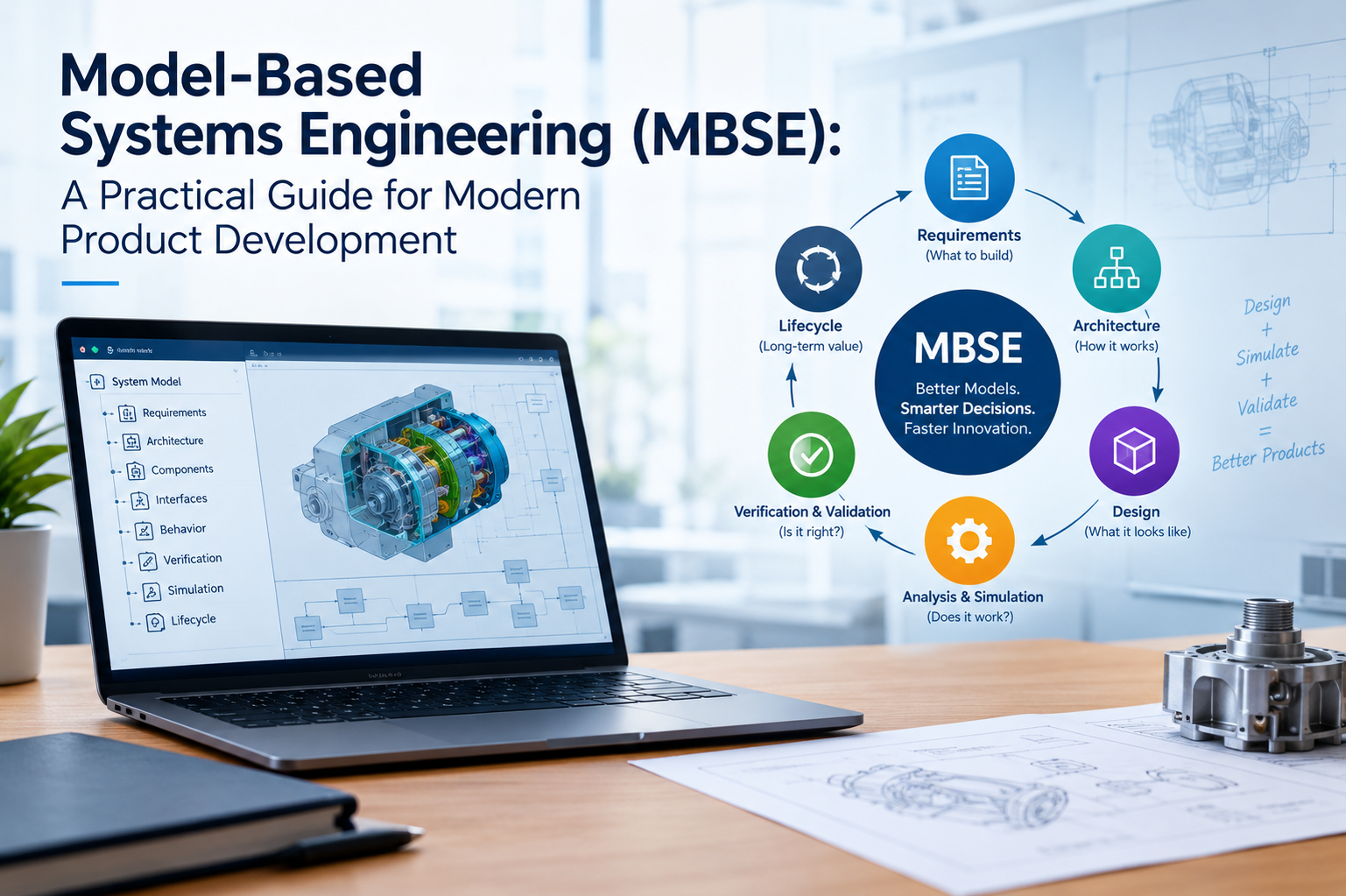
Complex products fail in the gaps between teams. A requirement changes in one spreadsheet, a design moves in another, and nobody tells the test group. MBSE closes those gaps by keeping requirements, architecture, behaviour and test evidence in one connected system model instead of scattered files. Document-led work starts to buckle once a product mixes mechanics, electronics and software, which is why more teams now weigh model-based engineering vs traditional engineering before their next project. The switch isn’t free. You need new skills, clean data and tools that connect, and MBSE in product development only pays off when those pieces line up. Here’s what the approach involves, starting with a plain definition.
What Is Model-Based Systems Engineering (MBSE)?
MBSE is a way of designing complex products where a system model, not a pile of documents, is the main record of the design. You describe requirements, structure, behaviour and interfaces as linked model elements, usually in a standard language such as SysML. Change one element and every linked view reflects it.
Picture a drone project. A flight-time requirement sits in the model. It links to the battery architecture, the power simulation and the test case that proves it. Edit the requirement and you see everything it touches within minutes.
Why Traditional Document-Based Engineering Can Become Difficult
Documents work fine for simple products. Trouble starts as the product grows. Specifications live in Word files, interface lists in spreadsheets and diagrams in slides, and each copy drifts from the others.
You usually feel the strain in four places:
- Two teams building against different revisions of the same spec
- A motor change that never reaches the thermal analysis
- Impact checks that mean reading hundreds of pages
- Integration problems that surface at prototype stage, when fixes cost the most
A weak systems engineering process rarely collapses in one big moment. It leaks time through small mismatches like these, and the rework never shows up on the project plan.
Key Components of an MBSE Workflow
The steps stay familiar: define needs, design, integrate, verify. What changes is that each step of the systems engineering process produces model content instead of paperwork.
| Component | What it holds |
| Requirements model | Stakeholder needs and system requirements, each with an owner and a status |
| Architecture model | Functions, subsystems and the interfaces between them |
| Behaviour model | States, sequences and logic, such as how a controller reacts to a fault |
| Simulation and analysis | Models that test the design before hardware exists |
| Verification links | A trace from every requirement to the test that proves it |
| Digital thread | Connections to CAD, PLM and test data |
A modelling tool and a shared repository hold all of this. MBSE tools for engineering range from SysML modellers such as Cameo and Capella to PLM platforms that carry the data onward.
How MBSE Supports Cross-Functional Engineering Teams
Mechanical, electrical, software and test engineers read the same model. Each group sees the interfaces it depends on, and the model flags conflicts early.
Say a mechanical engineer moves a sensor bracket. The model shows the connector it affects, and the electrical lead gets the alert that day, not at integration.
The model-based systems engineering benefits show up in daily work:
- Impact analysis gets faster because links replace page-by-page reading.
- Interfaces get defined once and reused, so mismatches drop.
- Analysts test concepts before CAD is final.
- Auditors follow a requirement to its test result without a scramble.
- Handovers to manufacturing and service carry less guesswork.
MBSE vs Traditional Systems Engineering
Model-based engineering vs traditional engineering comes down to where your information lives and how it gets checked.
| Area | Traditional (document-based) | MBSE |
| Source of truth | Many files, many owners | One system model |
| Change handling | Manual search through documents | Linked impact view |
| Consistency checks | Review meetings | Automated model checks |
| Reuse | Copy and edit | Reuse model elements |
| Traceability | Spreadsheets kept by hand | Built-in links |
| Starting effort | Low | Higher at the start |
Traditional methods still fit small, stable products. If you ship a low-variant part with a long, quiet life, MBSE may be more than you need. Once variants, software content and regulation pile up, the model starts paying for itself.
Challenges of Implementing MBSE
MBSE in product development rarely fails because of the software. People and habits cause most of the trouble.
- Skills take time: SysML and model thinking need months of practice, so budget for training.
- Teams model everything, then drown in detail. Start with one subsystem.
- Engineers used to documents resist a model-first routine until they see a quick win.
- Old requirements sit in Word and Excel and need cleanup before import.
- A system model that can’t reach CAD or PLM becomes one more silo.
Pick a pilot with one clear pain, such as interface errors, and measure it before and after. Early numbers win over skeptics faster than any slide deck.
How to Choose the Right Engineering Tools for MBSE
Start from your workflow, not a feature list. When you compare MBSE tools for engineering, test these points:
- Support for SysML and open exchange formats such as ReqIF and OSLC
- Links to your CAD, PLM and simulation data
- Access control and review features for teams spread across sites
- Training and local support for the day your engineers get stuck
- Licence cost against the size of your pilot
Your existing data matters most. If product data already lives in Teamcenter PLM, linking the system model there keeps requirements, configurations and change history together. The design side often runs in Siemens NX, so the thread from requirement to geometry stays unbroken. For analysis, you can tie Simcenter or Altair simulation results back to requirements as verification evidence.
At CJ Tech, we’ve worked as a Siemens channel partner for more than 15 years and serve 250+ customers across India. We start with your data, your team size and your product mix before we suggest any tool.
The model-based systems engineering benefits are real, but they come from steady habits: a small pilot, clean requirements and connected tools. If you want help scoping that first pilot, talk to our team.