Electric Mobility is no more a futuristic vision. Rather it has become the current industrial reality. This is why worldwide there is a global shift toward electric mobility. The vehicle’s heart changes as automotive manufacturers shift to electric powertrains from internal combustion engines. The battery pack in the vehicle is now the most critical, complex, and costly assembly.
A high-level of precision is critical to manufacturing these components. The stakes are extremely high from the ultra-thin cooling plates to complex battery housings. This is where Siemens NX CAM Software comes into the picture. The software has become the indispensable backbone of the modern machine shop.
WHY EV COMPONENTS DEMAND MORE?
EV Battery components are not just ‘parts.’ They are high-performance thermal and structural systems. Aluminum alloys are known for their lightweight and conductive properties. They present during high-speed machining unique challenges like heat deformation and vibration.
KEY CHALLENGES IN EV BATTERY COMPONENT MACHINING
- THIN-WALLED STABILITY: Cooling Plates often feature incredibly thin walls to maximize heat transfer. They require delicate toolpaths to prevent warping.
- LARGE-SCALE PRECISION: Battery trays (housings) are large structural parts. They need to maintain over long distances tight tolerances to ensure airtight seals.
- SURFACE INTEGRITY: Any burr or surface defect in a battery cooling circuit can result in electrical shorts or catastrophic leaks.
Manufacturers to meet these demands are gravitating to Siemens NX CAD CAM. As a unified platform, it helps bridge the gap between complex design and flawless execution.
HARNESSING NX CAM FOR HIGH—PRECISION MACHINING
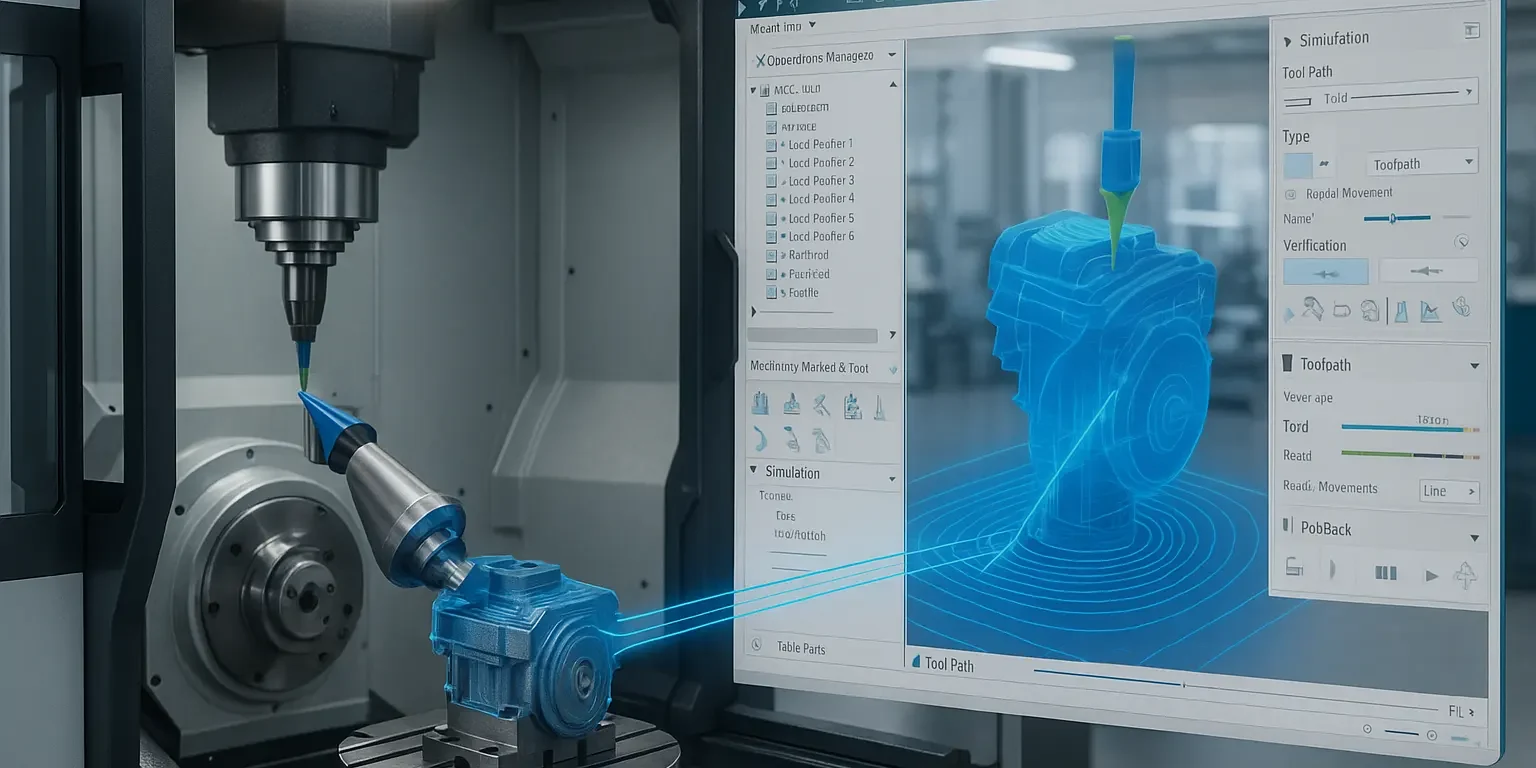
NX CAM offers a diverse spectrum of tools. They are designed to handle the specific geometries and material behaviors of EV parts. It also offers a ‘digital twin’ environment. Every movement is validated before the tool even touches the metal.
Aside from this, it additionally offers:
ADVANCED S-AXIS MILLING
Many EV components especially those with integrated cooling channels or complex structural ribbing, require multi-axis movement. Siemens NX CAM Software excels in 5-axis programming. It offers automated and tilt-tooling and collision avoidance. They ensure that the tool can reach without multiple setups deep pockets and intricate contours. This reduces the margin for human error and increase throughput.
HIGH-SPEED MACHINING (MSM)
Battery housings are often carved out of solid aluminum billets or large castings. Material removal rates are a major factor in profitability. NX CAM’s high-speed machining functions maintain a constant tool load. This prevents tool breakage while ensuring a consistent surface finish. They are critical for the mating surfaces of battery seals.
FEATURE-BASED MACHINING (FBM)
EV Battery trays are riddled with hundreds of holes for sensors and fasteners. It is near-impossible to manually program each one. They will turn out to be a recipe for fatigue and error. NX CAM’s Feature-Based Machining by applying the right machining sequence on your shop’s best practices library, automatically recognizes holes, pockets, and slots. This can reduce by up to 90 percent programming time.
POWER OF UNIFIED SIEMENS NX CAD CAM ENVIRONMENT
‘Data Translation’ is among the biggest risks in high-precision manufacturing. Small errors can when a design is shifted from one software to another for machining, creep in. The CAD model and the CAM toolpath are parametrically linked as Siemens NX CAD CAM is a single, integrated platform. The toolpath in NX CAM updates automatically when changes are made to the diameter of a cooling port in the CAD file. This kind of ‘associativity’ ensures that the machine shop is always working on the most recent revision. They help eliminate expensive scrap.
DIGITAL TWIN: SIMULATION AND VALIDATION
A ‘crash’ in the world of high-precision machining does not just break a tool. It can also for weeks take a costly machine offline. NX CAM offers G-Code driven simulation. Other software simulates the internal toolpath. NX CAM on the other hand .simulate the actual G-Code that will run on the machine.
- VIBRATION ANALYSIS: Predict and avoid in thin-walled cooling plates, tool chatter.
- COLLISION DETECTION: Visualize the entire machine environment. This includes fixtures and spindles.
- TIME OPTIMIZATION: Fine-tune air-cuts and rapid environments to shave seconds of every cycle.
SUSTAINABLE MANUFACTURING IN THE EV SECTOR
The EV industry is built on the premise of sustainability. Hence, it is only fitting that the manufacturing process reflects this. Siemens NX CAM Software contributes to ‘Green Machining’ by:
- REDUCING MATERIAL WASTE: Optimizes nesting and toolpaths. This helps extract the most out of every aluminum billet.
- ENERGY EFFICIENCY: Reduces cycle times through optimized tool engagement. This leads to lower power consumption by CNC Machines.
- EXTENDING TOOL LIFE: Smarter toolpaths mean less friction and heat. This allows shops to earn more parts out of every end mill.
FUTURE-PROOFING WITH SIEMENS NX CAM
The geometry of battery components as solid-state batteries and new structural shapes emerge, will become more complex. Siemens NX CAM Software is continually updated with AI-driven path planning and cloud-based collaboration tools.
So when you invest in Siemens NX CAD CAM, you’re not just solving today’s machining problems. You will also be building a digital infrastructure capable of handling the next-generation of EV innovation.
CONCLUSION
When you say ‘Good Enough’ in the high-stakes world of EV manufacturing, know that it does not count for much. That’s because the EV landscape evolves rapidly. What was ‘Good Enough’ today will not be so tomorrow. Rather they become a ‘relic of the past.’ High-precision machining of battery components requires advanced software solution that offers a mixture of automation control, technical control, and total reliability.
By leveraging CJ Tech’s proven NX CAM capabilities, you gain access to the requisite tools to convert with surgical precision complex designs into physical reality.
FAQs
1. How are design changes in battery housings handled by Siemens NX CAD CAM?
A big advantage of Siemens NX CAD CAM is it offers a unified platform with ‘associativity.’ Now if a design engineer modifies the dimensions of a battery tray or moves a mounting hole in the CAD model, the toolpath in NX CAM will get updated automatically.
They help eliminate the risk of machining outdated versions. They also reduce to a significant extent rework.
2. I want some assistance with thin-walled cooling plate manufacturing. Can Siemens NX CAM Software provide the same?
Yes, Machining thin-walled aluminum cooling plates is challenging. This is due to vibration (chatter). Siemens NX Software includes advanced vibration analysis and specialized finishing strategies. They optimize cutting speeds and feeds. They also ensure the plates without warping remain dimensionally accurate.
3. What is Feature-Based Machining (FBM)? How will it benefit EV production?
Battery enclosures typically require hundreds of drilled and tapped holes. Feature-based Machining in NX CAM automatically recognizes these geometric features (slots, holes, pockets). Then, they apply the appropriate machining sequence from a pre-defined library. This helps reduce programming time by up to 90 percent. Thus, they facilitate faster scaling of production.
4. Does NX CAM support G-Code driven simulation for EV parts?
Yes. Standard CAM Software simulates internal toolpath data. NX CAM on other hand simulates the actual G-CODE that will be sent to the CNC Machine. This ‘DIGITAL TWIN’ approach is for high-value EV parts critical. T they allow engineers to detect potential collisions or axis over.
5. How is material utilization for battery components improved with the software?
EV battery trays are often machined from large, expensive aluminum billets. Siemens NX CAM Software uses optimized nesting and adaptive roughing strategies. They are used to remove material more efficiently. This speeds up the process by up to 60 percent. They also ensure minimal tool wear and maximum material yield.
6. Does Siemens NX CAM Software support ‘Green Manufacturing’?
NX CAM by optimizing toolpaths reduces the local cycle time per part. Shorter cycle times lead to lower energy consumption by the machine tools. Additionally, the software by extending tool life through smoother engagement strategies helps reduce the carbon footprint that’s associated with tool replacement and scrap metal.